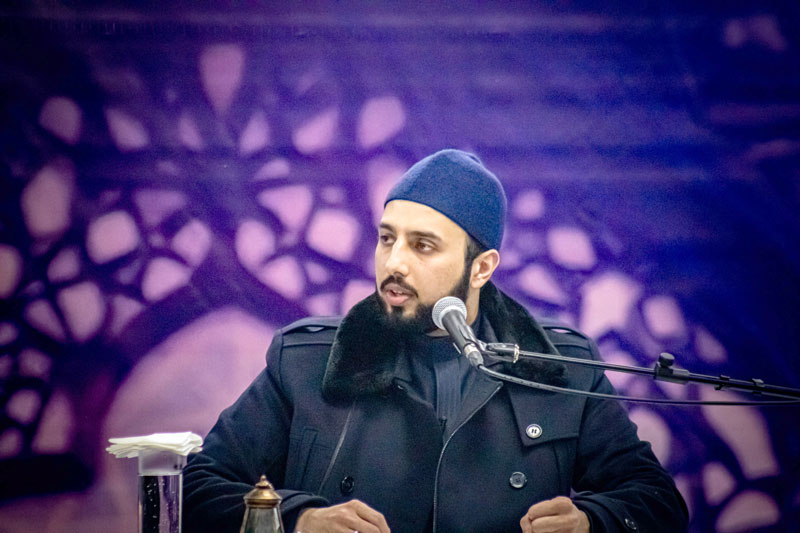
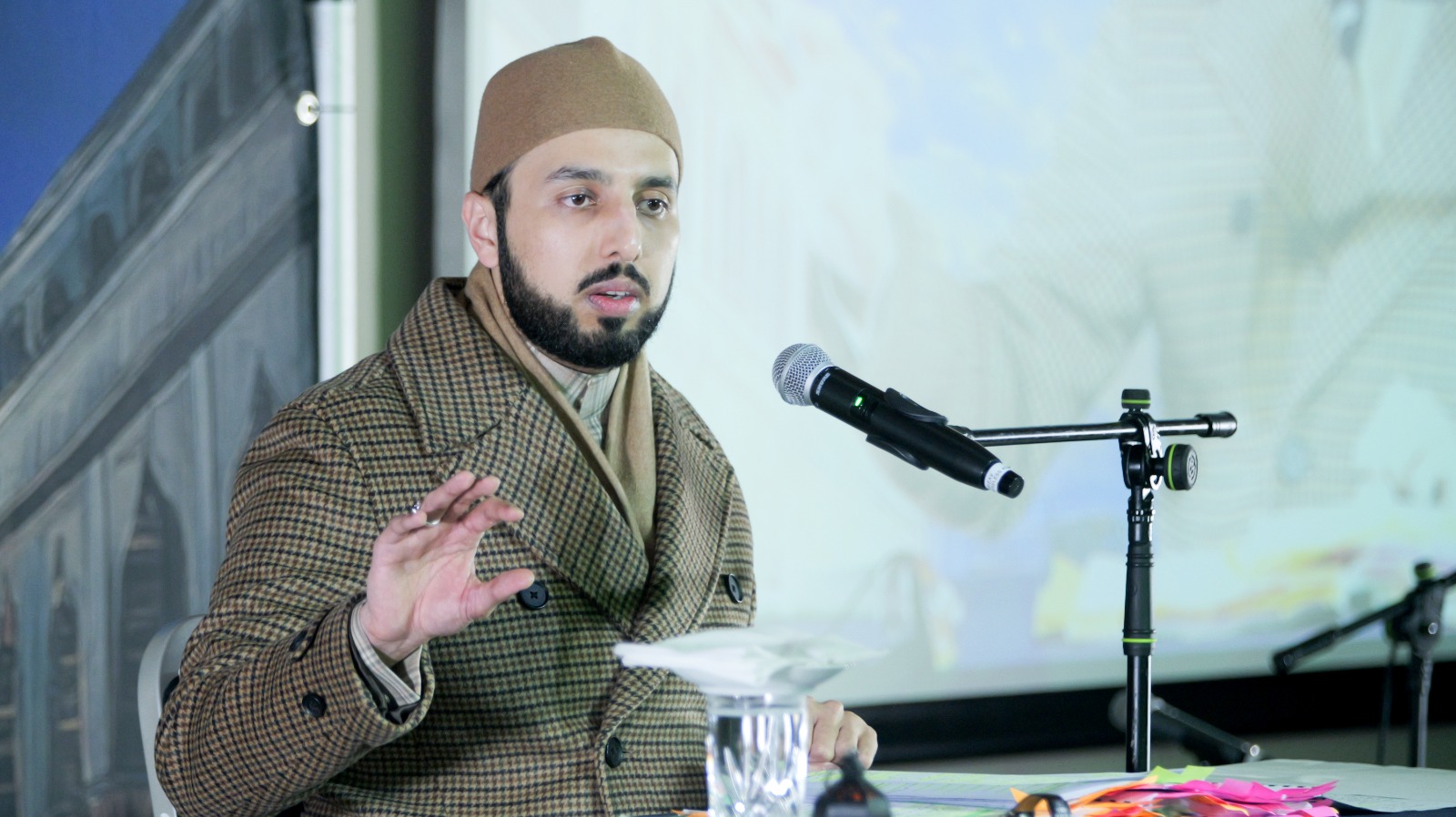
Shaykh Hammad Mustafa al-Madani al-Qadri attended a Halaqah organised by Minhaj Muslim Generations on the 29th night of Ramadan at the Minhaj-ul-Quran London Centre. Shaykh Hammad Mustafa Qadri also led a few cycles of the Taraweeh prayer after which the event formally began. The event commenced with the recitation of the Quran and the recitation of a Nasheed.
Shaykh Hammad Mustafa al-Madani al-Qadri then began his discourse by addressing the spiritual state of the modern believer, explaining that many of us have become so immersed in the material world that we have lost sight of the One who created us. The objective of life, he emphasised, is not to chase after the world, but to become seekers of Allah Almighty. Unfortunately, many have lost that connection and instead pursue temporary pleasures, power, and possessions, which ultimately have no lasting value in the sight of Allah.
Shaykh Hammad Mustafa Qadri reflected on how Allah Almighty has placed tests and trials in our lives in different forms. For some, the test may come in the form of family, where excessive attachment or overprotectiveness towards children can become spiritually unhealthy. Drawing upon insights from psychology, Shaykh Hammad Mustafa Qadri explained how parents sometimes project their own identities onto their children, resulting in a possessive relationship that hinders a child’s growth and independence. True Islamic parenting, he taught, involves nurturing children while allowing them to grow, make mistakes, and learn to differentiate between right and wrong.
Moving beyond family, Shaykh Hammad Mustafa Qadri highlighted how other individuals may fall into the trap of materialism, becoming infatuated with wealth, investments, status symbols, and outward displays of success. He drew an analogy to the Arabs of the past who prized noble horses, noting that today many people display their success through luxury cars and branded possessions. This, he explained, is indicative of a deeper emptiness, where one attempts to find worth and identity in what is owned, rather than in their relationship with Allah.
To emphasise the seriousness of this distraction, Shaykh Hammad Mustafa Qadri presented a powerful analogy: a person at the airport with a booked flight, who becomes so lost in the duty-free shops that they miss their flight. This, he explained, is our reality. Our life is the airport, and our destination is nearness to Allah. Yet, we get caught up in the “duty-free” distractions of this world and forget our true journey. However, the mercy of Allah is such that another flight is always available, so long as we choose to board it. Ramadān, he explained, is one of those flights, a chance to return to Allah and realign our hearts with our true purpose.
Shaykh Hammad Mustafa Qadri then questioned whether our worship in Ramadan was truly for Allah, or merely a repetition of family traditions. He reminded the audience that true ibadah (worship) is rooted in presence and sincerity that when we recite the Quran, we are engaging with the actual words of our Creator, and when we stand in prayer, we must do so with the consciousness that we are standing before Him. Worship without presence, he said, is a ritual without spirit.
Quoting Imām al-Shāfiʿī, Shaykh Hammad Mustafa Qadri offered two profound principles for spiritual reform: firstly, that time is like a sword: if you do not cut it, it will cut you. In other words, we must take control of our time and dedicate it purposefully to Allah. Many claim they do not have time for prayer, reflection, or service to the community, but in truth, time must be made, not found. Secondly, he shared that the nafs (ego) must be engaged in righteousness; if left idle, it will occupy itself with distractions and evil. Whether through social media, entertainment, or relentless pursuit of professional success, the nafs, if untamed, will steer the heart away from Allah.
Shaykh Hammad Mustafa Qadri beautifully explained that every action, no matter how mundane, must be rooted in sincerity and a desire for divine pleasure. Whether one is cleaning a mosque, caring for a patient, or sitting behind an office desk, every role must be carried out with ihsān — excellence and awareness that Allah is watching. Even our smiles, greetings, and interactions should be governed by the question: “Will Allah be pleased with this?”
The discourse then turned towards the state of the heart. Shaykh Hammad Mustafa Qadri described how sins and negligence cause the spiritual heart to become lifeless, numb, and hardened. A heart that no longer trembles at the Qur’an or softens at prophetic sayings is a heart in need of revival. However, he reminded the audience that no heart is beyond repair. Through sincere tawbah (repentance), humility, and a return to Allah, even the hardest of hearts can be revived and restored to spiritual vitality.
To illustrate the highest level of spiritual aspiration, Shaykh Hammad Mustafa Qadri referenced Sayyidunā Abū Bakr al-Ṣiddīq (may Allah be pleased with him), who once declared that he was neither a seeker of this world nor a seeker of paradise, but solely a seeker of Allah. This, the Shaykh explained, is the ultimate goal of the believer: to desire not the rewards of this life or the next, but simply the nearness and pleasure of the Divine. It is this level of love, devotion, and sincerity that elevates one in the sight of Allah.
Shaykh Hammad Mustafa Qadri shared a heart-rending narration in which Allah declares to Sayyidunā Mūsā (peace be upon him) that He still longs for those who have strayed. Despite their sins, distractions, and negligence, Allah continues to wait for His servants with gentleness and mercy. If only they knew how much Allah yearns for them to return, their hearts would melt with love and astonishment. This final message served as a reminder that no matter how far one has fallen, the door of Allah’s mercy remains open: all that is needed is the will to return.
Shaykh Hammad Mustafa al-Madani al-Qadri also shared the profound story of al-Fuḍayl ibn ‘Iyāḍ and the Umayyad prince, using it as a powerful illustration of the transformative power of the Qur’ān. Al-Fuḍayl, once a notorious highway robber, overheard a man reciting verses from Surah al-Muṭaffifīn: “Woe to those who give less [than due]…” (83:1). These verses pierced his heart and led him to completely abandon his life of sin and turn towards Allah in sincere repentance. In the encounter with the Umayyad prince, al-Fuḍayl reminded him of the reality of death and the fleeting nature of worldly power.
#HammadQadriMQI #MQI #HMQ #MinhajMuslimGenerations #Itikaf2025 #RamadanReflections #SpiritualAwakening #SeekingAllah #Taraweeh #IslamicWisdom #HeartSoftening #JourneyToAllah #InnerPeace #RevivingFaith #QuranicInsights #SufiTeachings #DivineLove #TimeIsASword #TransformYourHeart #RamadanLessons #ReturnToAllah #SpiritualGrowth